Best 3D Printer for Beginners 2026 (Complete Starter Guide)
FAQs for The best 3D printer for beginners 2026: Getting started with 3D printing in 2026 doesn’t have to feel overwhelming.


FAQs for The best 3D printer for beginners 2026: Getting started with 3D printing in 2026 doesn’t have to feel overwhelming.

Learning how to use PrusaSlicer will help you unlock better print quality, faster slicing, and more control over your projects

Struggling with slicer crashes, STL errors, or weird print previews? This guide dives into the most common 3D software issues and how to fix them fast.

A concise comparison of Prusa and Creality—exploring brand philosophy, hardware, user experience, and long-term value to help you choose the right 3D printer.

Whether you want to cover the cost of your next filament roll… or launch a niche product line… this guide gives you the roadmap. It’s not about hype.

When it comes to choosing the best 3D printer for kids and families (including your teens), safety, ease of use, and creative potential are key priorities.
Introduction How do you fix ghosting in 3d printing? If your prints show ghosting (echo-like artifacts) or ringing (vibrations in walls), your travel speed might be too high. Fine-tuning speed reduces unwanted surface imperfections. Why This Matters Ghosting and ringing occur when the printer moves too fast, causing vibration artifacts in walls and edges. Reducing…

The Best Filament for Durable Mechanical Components (Gears, Mounts, Brackets) may be PETG, ABS or Nylon. Read here to learn more.
Introduction Why swap nozzles for different filaments? Are you using multiple filament types? Dedicated nozzles for each material reduce clogging and contamination, ensuring better print consistency. Why This Matters Filament residue left in nozzles from previous prints can mix with new materials, causing clogs, poor extrusion, and print failures. Switching nozzles prevents cross-contamination. How to…

Filament diameter plays a critical role in extrusion consistency, affecting flow rate, print precision, and overall reliability.
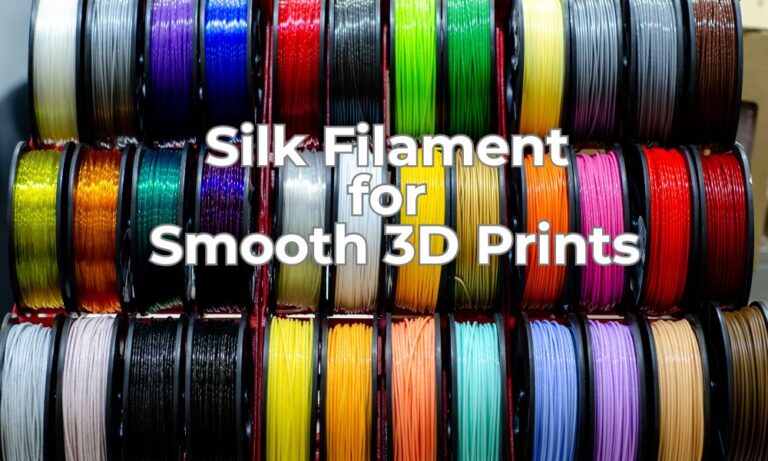
Silk filament for smooth 3D prints is a visually stunning material designed for aesthetic 3D printing projects.
Introduction Why Adjust Your Z-Offset for Perfect First-Layer Adhesion? If your prints have adhesion issues, your Z-offset setting may need adjustment. Proper tuning ensures the nozzle is positioned correctly for smooth and consistent first-layer adhesion. Why This Matters Too high a Z-offset causes weak bed adhesion, while too low squishes layers, leading to poor extrusion….

Introduction Always fix loose belts in 3D printing. Loose printer belts cause misaligned layers, poor print precision, and inconsistent extrusion. Checking and tightening belts ensures accurate movements and better print quality. Why This Matters Belts control movement precision—when loose, they cause layer shifting, ghosting, and poor extrusion accuracy. Proper belt tension ensures clean, sharp prints….

Introduction What is the best layer height for 3D printing? Lower layer height leads to smoother prints with finer details—but it also increases print time. Adjusting layer height strategically optimizes prints for precision and performance. Why This Matters Layer height determines how visible layer lines are—smaller heights create better surface finish, while larger heights improve…

Artificial intelligence is transforming 3D modeling and CAD workflows, enabling designers to create optimized, lightweight, and functional geometries with minimal manual input.